



Happy Wednesday! Today, we are taking a look at the Fasting-Mimicking Diet. See what it is about, and get our thoughts on this diet.
Interested in this topic? You may enjoy:


Share this post with anyone you know who may be interested in our anti-inflammatory In The News series!


What Is a Fasting-Mimicking Diet?
A fasting-mimicking diet (FMD) is a structured, short-term eating plan that mimics the effects of fasting while still allowing you to eat some.
Instead of completely abstaining from food, you eat very low-calorie, carefully designed meals for about 4-5 days that aim to trigger some of the same biological responses as fasting.
How Does Fasting-Mimicking Work?
During a fasting-mimicking cycle:
Calories are significantly reduced (usually around 700-1,100 per day)
Meals are low in protein and sugar, and higher in healthy fats
The body begins to shift into a fasting-like state
This is touted to promote fat burning, cellular “cleanup” processes (autophagy), and changes in metabolic and inflammatory pathways.
What Does a Fasting-Mimicking Diet Look Like?
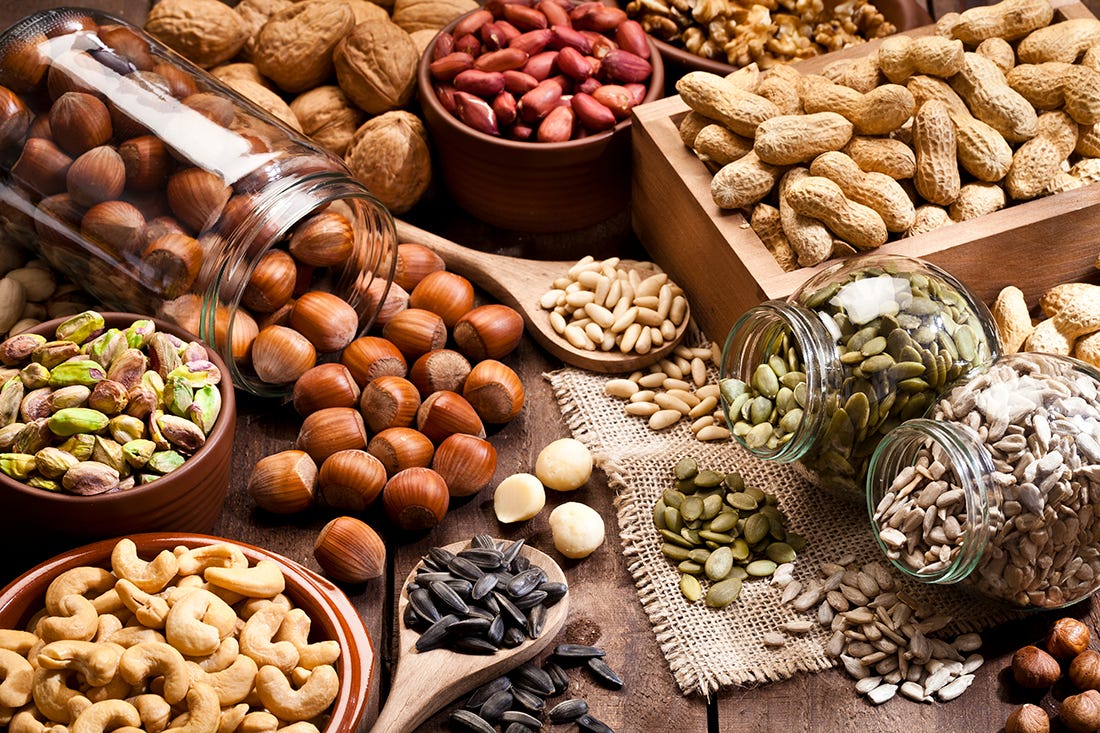
A cycle might include:
Vegetable-based soups
Nuts and seeds
Olive oil
Herbal teas
After 4-5 days, you return to normal eating.
Some people repeat this once a month or a few times per year.
Does Fasting-Mimicking Provide Benefits?
Research is still evolving, but some potential benefits may include:
Metabolic support. Improved blood sugar regulation and reduced insulin resistance may result from following this eating plan.
Cellular repair. Activation of processes that help remove damaged cells.
Inflammation reduction. Some evidence of lowered inflammatory markers.
Longevity research. Early studies (mostly in animals) suggest possible links to healthy aging.
Are There Downsides of Fasting-Mimicking?
It’s not for everyone, especially:
Pregnant or breastfeeding individuals
People with a history of eating disorders
Those who are underweight
Certain medical conditions (without supervision)
Fasting-Mimicking can also be difficult as hunger, fatigue, and low energy are common, and it requires planning and discipline.
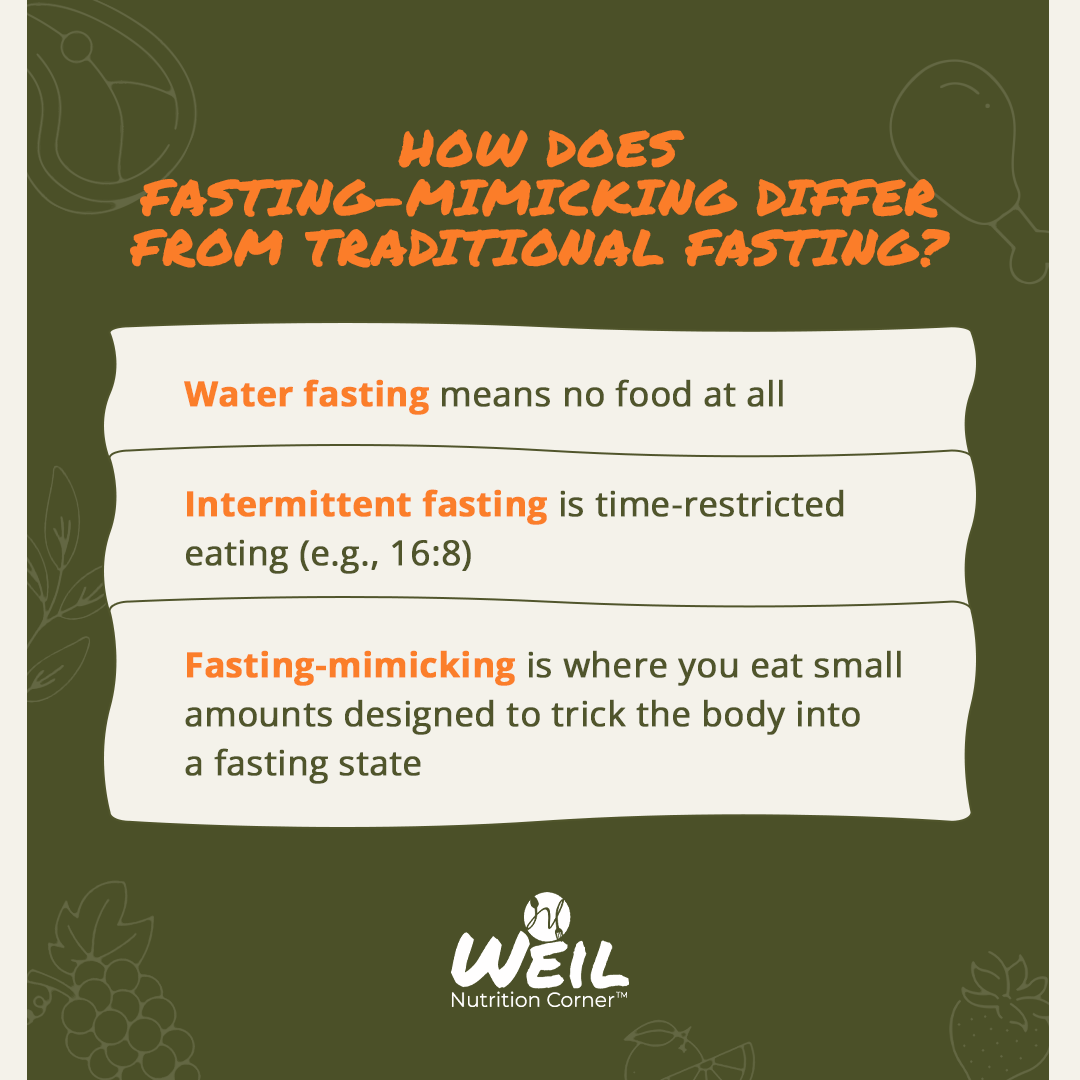
How Does Fasting-Mimicking Differ from Traditional Fasting?
Our Takes On The Fasting-Mimicking Diet
Our WEIL Nutrition Corner™ VIPs can read our takes on this topic, and have full access to our entire In The News library of content! Upgrade today to unlock everything we offer, including guides, recipes, courses, challenges and more.