



Happy Monday! Today we are taking a look at quinoa - a nutrient-dense seed (often called a grain) that is a complete plant-based protein and also a great source of fiber and other essential minerals. Read on for how we like to use quinoa, why it’s a healthy choice, a pro tip on how to prepare it, ways to add quinoa to your meals, and recipes.
And if you missed any of our posts this week, check them out below!


Forward this post to anyone you know who may be interested in our healthy kitchen recommendations and anti-inflammatory Food As Medicine series and recipes!


Food as Medicine: Quinoa - A Small Grain with Big Nutritional Benefits
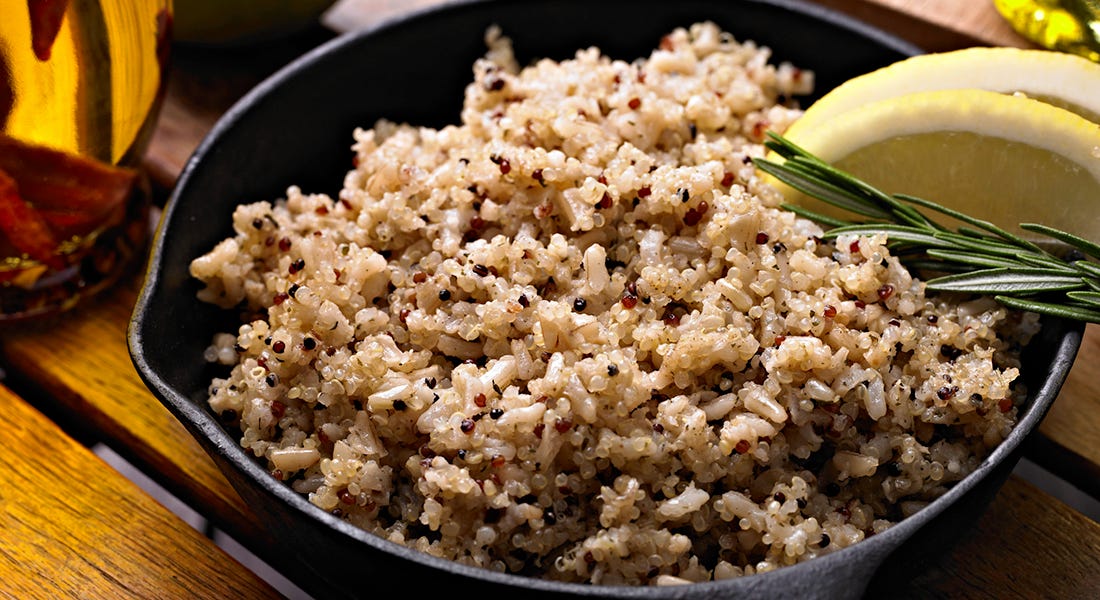
Quinoa is a genuinely nutrient-dense food that fits well into a balanced, anti-inflammatory diet. As mentioned above, technically it’s a seed, though it’s often used like a grain (it’s a good alternative for rice, barley and other fluffy grains). Learn more about the benefits of quinoa and try the recipes.
Why Quinoa Is a Healthy Choice
It is a complete plant protein. Unlike most plant foods, quinoa contains all nine essential amino acids. This makes it a valuable protein source, particularly for those who eat less meat or follow a more plant-forward diet.
It supports steady energy. Quinoa is rich in complex carbohydrates and fiber, which help regulate blood sugar and provide more sustained energy compared to refined grains.
It is naturally gluten-free. Quinoa is a good option for those avoiding gluten, while still offering more nutritional value than many processed gluten-free alternatives.
It has anti-inflammatory potential. With its combination of fiber, antioxidants, and healthy fats, quinoa fits well into dietary patterns aimed at reducing chronic inflammation.
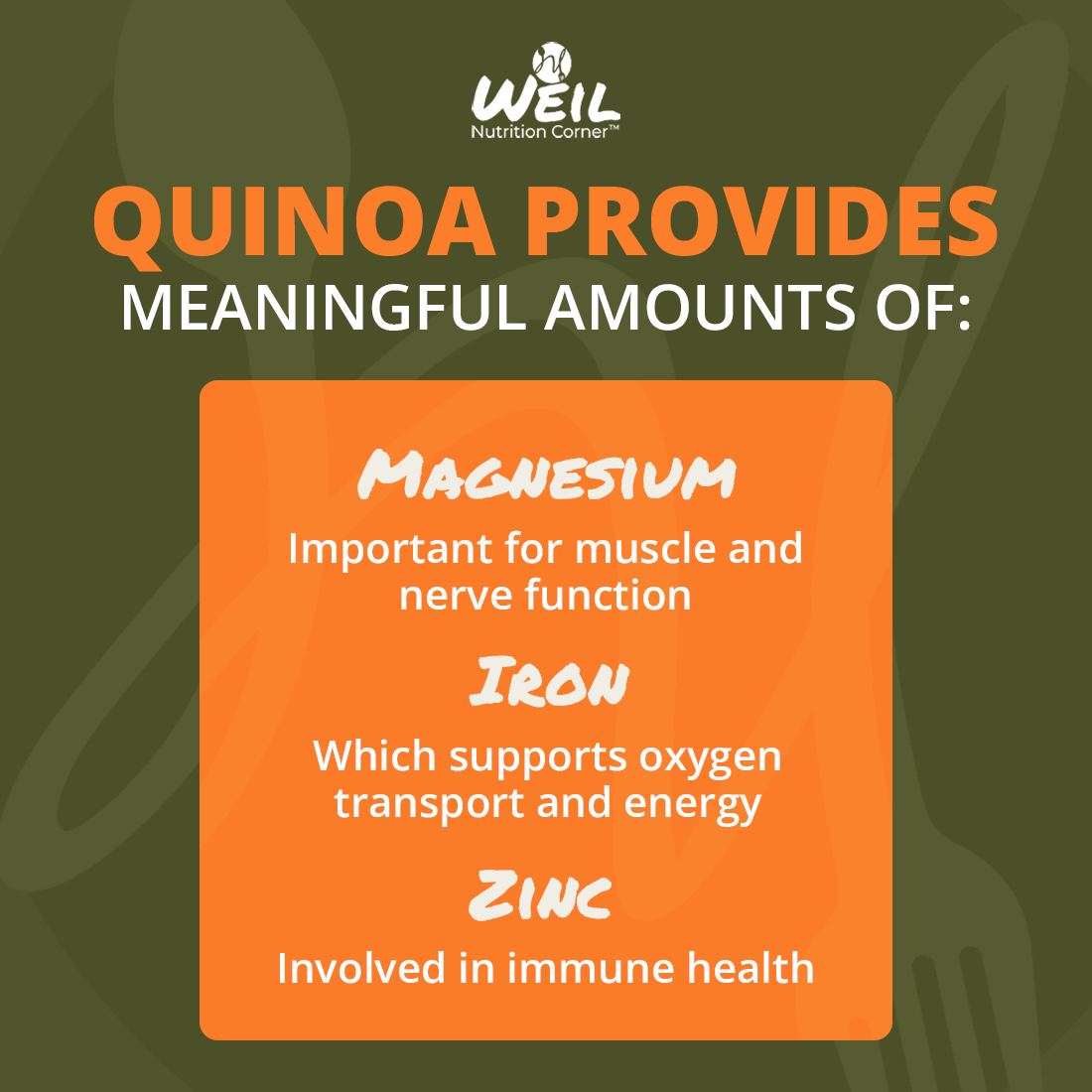
Quinoa is also rich in necessary vitamins and minerals.
What Are The Different Types of Quinoa?
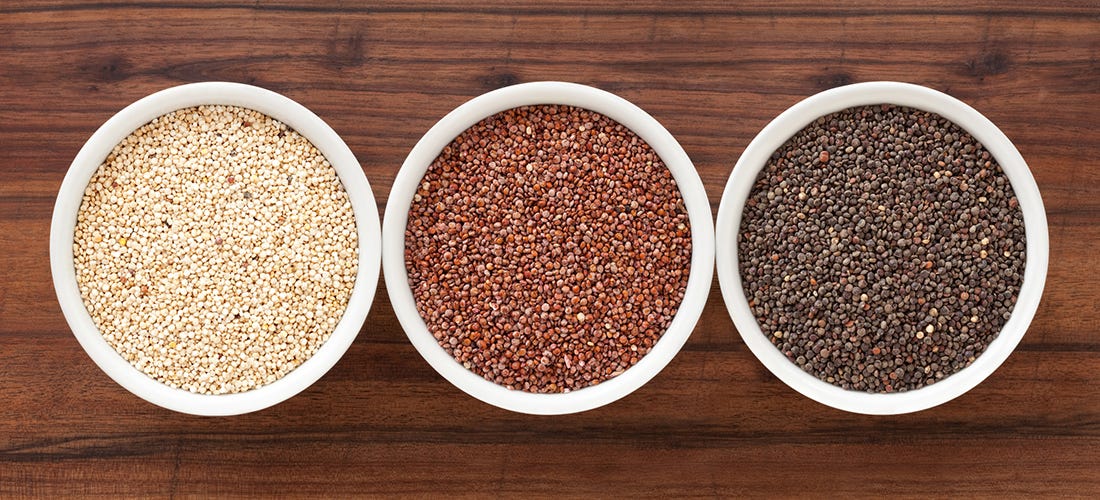
Different types of quinoa offer different flavor and texture profiles - but they are for the most part the same when it comes to nutrition. All types of quinoa provide complete protein (all essential amino acids), fiber and magnesium, iron, and zinc. The differences are more about taste and texture than nutrition.
White Quinoa. This is the most common, with a mild, slightly nutty flavor. The texture is light and fluffy when cooked.
Best for:
Salads
Bowls
Side dishes
Red Quinoa. With a slightly earthier flavor and texture, red quinoa holds its shape better than white.
Best for:
Grain salads
Dishes where you want more texture
Black Quinoa. A slightly sweeter and more robust flavor sets black quinoa apart. It is also crunchier.
Best for:
Adding contrast to dishes
Mixing with other grains or vegetables in a stir-fry
Tri-Color Quinoa. This blend of white, red, and black quinoa combines textures and flavors, making it visually appealing. You can use this in any of the dishes mentioned in this post!
WEIL Nutrition Corner® Tip: You can swap any type of quinoa in a recipe, but use white for softer dishes, red or black when you want more structure, and tri-color for variety and presentation.
Dr. Weil on Quinoa:
Quinoa, pronounced “keen-wah,” is sometimes referred to as a grain but is really a pseudocereal, meaning that it is the seed of a broadleaf plant (true cereals are the seeds of grasses). The quinoa plant is a relative of beets, spinach and Swiss chard, but we treat its seeds as we would a grain, preparing and eating them in much the same way. They are very quick cooking. Quinoa’s protein is complete, containing all nine essential amino acids – a rarity in the plant kingdom. In fact, quinoa has the highest protein content of any grain. Quinoa is gluten-free and easy to digest - I quite enjoy it.
How to Use Quinoa in Everyday Meals
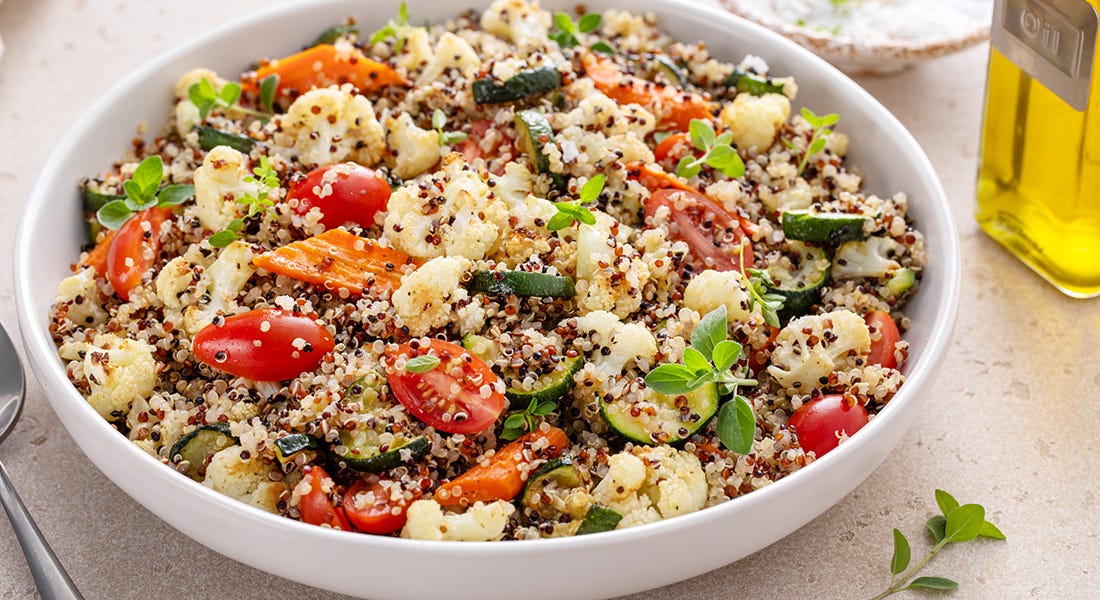
Our WEIL Nutrition Corner® VIPs have access to simple ways to use quinoa, our important cooking tip when preparing quinoa, and our new quinoa recipe, Quinoa Fried Rice. Upgrade today and unlock all our recipes, meal plans and more!