



Happy Monday! Today, we’re sharing how to eat more dark leafy greens! Dark leafy greens are nutritious powerhouses and extremely versatile. See how we like to use dark leafy greens and learn more about why they’re so healthy below, plus a recipe! (And if you are concerned about the oxalates in some dark, leafy greens, we're diving deeper into that topic on Wednesday…)
We’re also teaching you how to boil eggs. There are many different ways, depending on your preference, but we share our methods, including how to peel eggs. Enjoy!
We want to know: How do you boil your eggs? Share in the comments!
(P.S. Become a paid subscriber to join the full conversation.)


How We Use Dark, Leafy Greens
Dr. Weil:

I love all types of dark leafy greens and recommend eating a wide variety. My favorite way to use them up is to remove any thick or tough stems. Chop greens coarsely. Heat olive oil over medium heat. Stir-fry greens just until they are evenly wilted and tender, but still bright green. Season with salt and pepper (or red pepper flakes) and a little vinegar (red wine or balsamic). For a different variety, sauté sliced or chopped onion until golden before adding greens, or add some mashed garlic along with greens. Other possible additions include olives, sun-dried tomatoes, and capers. Good as a side dish or mixed with pasta.
Diana:

I’m a big fan of the kale salad my dad makes (a staple at True Food and found in many of his cookbooks). However, I’ve recently been loving arugula salads mainly because they are so easy to make! I add a few big handfuls of washed arugula to a bowl, then add sliced ripe fruit (apples, nectarines, peaches, pears all work well). Toss with olive oil, red wine vinegar, and a squeeze of lemon. Add salt and pepper to taste. Finish with big shavings of Parmesan cheese.

Dark Leafy Greens: Why You Should Be Eating Them
Dark, leafy greens are an excellent way to increase your intake of vitamins and nutrients. They are versatile and can be cost-effective, so read on for a look at each and how they can benefit your health.
Why You Should Be Eating Greens
Dark, leafy greens are excellent sources of vitamins A, K, and C - essential micronutrients that play a crucial role in supporting the immune system, eye and bone health, and maintaining healthy-looking skin; some varieties also offer iron. Research suggests that consuming leafy green vegetables, such as spinach, collard greens, and kale, on a daily basis can help slow age-related declines in cognition and memory. A study from Chicago’s Rush University Medical Center found that, even after 10 years of follow-up, people who ate the most of these vegetables daily were cognitively 11 years younger than those who consumed the least.
Now that you know why, let’s take a look at four of our favorite dark leafy greens, ways to use them, tips on storing them so they stay fresh longer, plus a Kale Pesto recipe!
Kale

As mentioned above, this is one of our favorite greens. Kale is an extraordinarily nutritious vegetable: eating it can increase your intake of fiber, vitamins (including C, the provitamin beta-carotene, and folic acid), calcium, and magnesium. It can also help reduce inflammation, lower cholesterol levels, and protect the immune system. One cup of kale provides:
Over 100 percent of the Daily Value (DV) of vitamin K, an essential nutrient that helps regulate normal blood clotting and may also be helpful for bone health.
Over 100 percent of the DV of vitamin A, which is important for bone growth, the immune system, and reproductive health.
Eighty-eight percent of the DV of vitamin C, a powerful antioxidant that helps to protect against heart disease, repairs and regenerates tissues, and may protect against some cancers by combating free radicals.
Kale is also a rich source of organosulfur compounds, which have been linked to cancer prevention. Additionally, kale is low on the glycemic index, making it a suitable choice for individuals following a low-glycemic diet. You can eat kale cooked or raw, in salads, stir-fries, or even smoothies!
Try our Kale Pesto Recipe!

This recipe swaps out the basil for kale - a delicious way to eat your dark, leafy greens.
Types of Kale
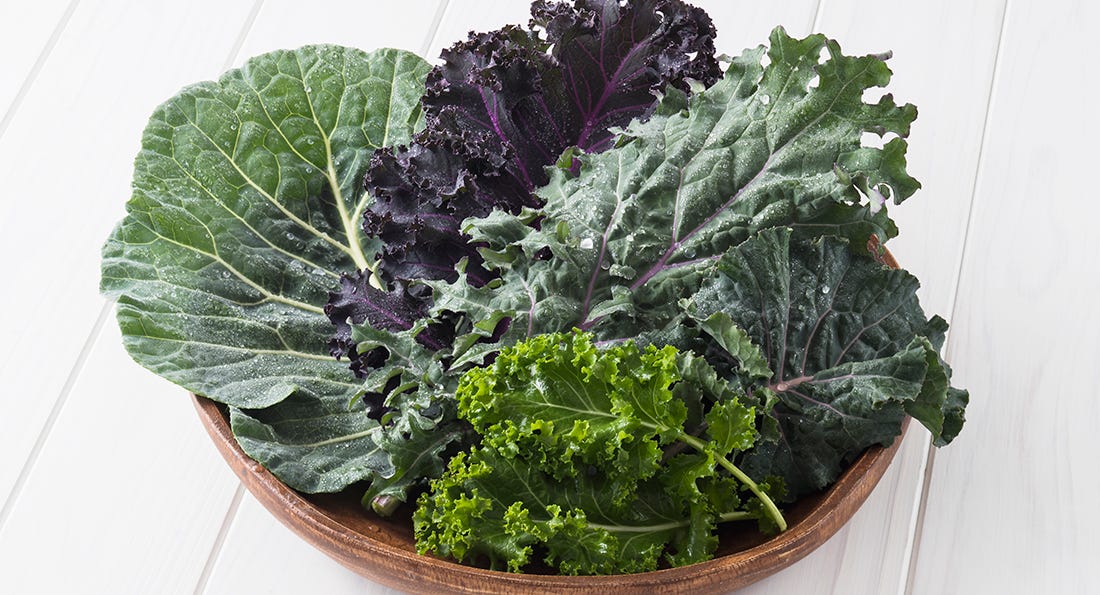
There are three general types of kale most commonly found in grocery stores: