



Welcome to our Wednesday Weil Nutrition Corner Newsletter™ - each week we will take a deep dive into what is trending in the world of nutrition, cooking and food, plus take a look at foods and spices that are part of the Anti-Inflammatory Diet. Enjoy!


Protein Needs
You have probably seen the push for higher protein intake lately; recommendations for 200 grams or eating 30 grams of protein at breakfast are just about everywhere, regardless of a person’s age, activity, or health status. But how much protein do we actually need? What’s the bare minimum to function properly? Can too much protein be harmful?
Let’s explore!
Protein is composed of amino acids that link together to form longer chains. It serves as the building blocks for tissues, muscles, bones, and skin. Protein is found in every cell of the body and plays a vital role in growth, development, cell repair, hormone regulation, immune function, and the facilitation of chemical reactions.
Amino acids are categorized into two main groups: essential and nonessential. Essential amino acids cannot be produced by the body and must be obtained from the foods we eat. Nonessential amino acids are equally important, but the body can synthesize them from essential amino acids or through the natural breakdown of dietary protein. The body requires nine essential amino acids and 11 nonessential amino acids.
A complete protein source contains all nine essential amino acids. These are primarily animal-based foods such as meat, fish, poultry, and dairy. In contrast, incomplete protein sources contain only some essential amino acids. These are mostly plant-based foods like vegetables, fruits, legumes, nuts, seeds, and whole grains.
However, those following plant-based diets can still easily meet their protein needs by eating a diverse diet. Since all foods contain amino acids, consuming a wide range of plant-based proteins throughout the day ensures the body gets all essential amino acids. Combining sources like legumes and grains (e.g., beans and rice, lentils and whole wheat bread, or hummus and pita) provides the full spectrum of amino acids. However, even a well-balanced vegetarian diet typically supplies sufficient protein without intentional pairing. Foods like quinoa, soy products (tofu, tempeh, edamame), and hemp seeds are also complete plant-based protein sources. It was once believed that all essential amino acids needed to be consumed in the same meal for proper protein synthesis. However, we now know this is not the case.
The Recommended Dietary Allowance (RDA) for adult protein intake is a minimum of .8g/kg. This is the amount to prevent protein deficiency; the optimal intake for most adults may be closer to 1-1.6 g/kg, depending on lifestyle. Note that this is gram per kilogram, not gram per pound.
To determine your daily protein needs and see what protein amounts are recommended for men, women, and pregnant or breastfeeding mothers, click the link below:
So what does this look like when it comes to food? Below are examples of foods that provide 64 grams of protein, the typical baseline for a sedentary 175-pound woman or man:
Animal-Based Protein Sources
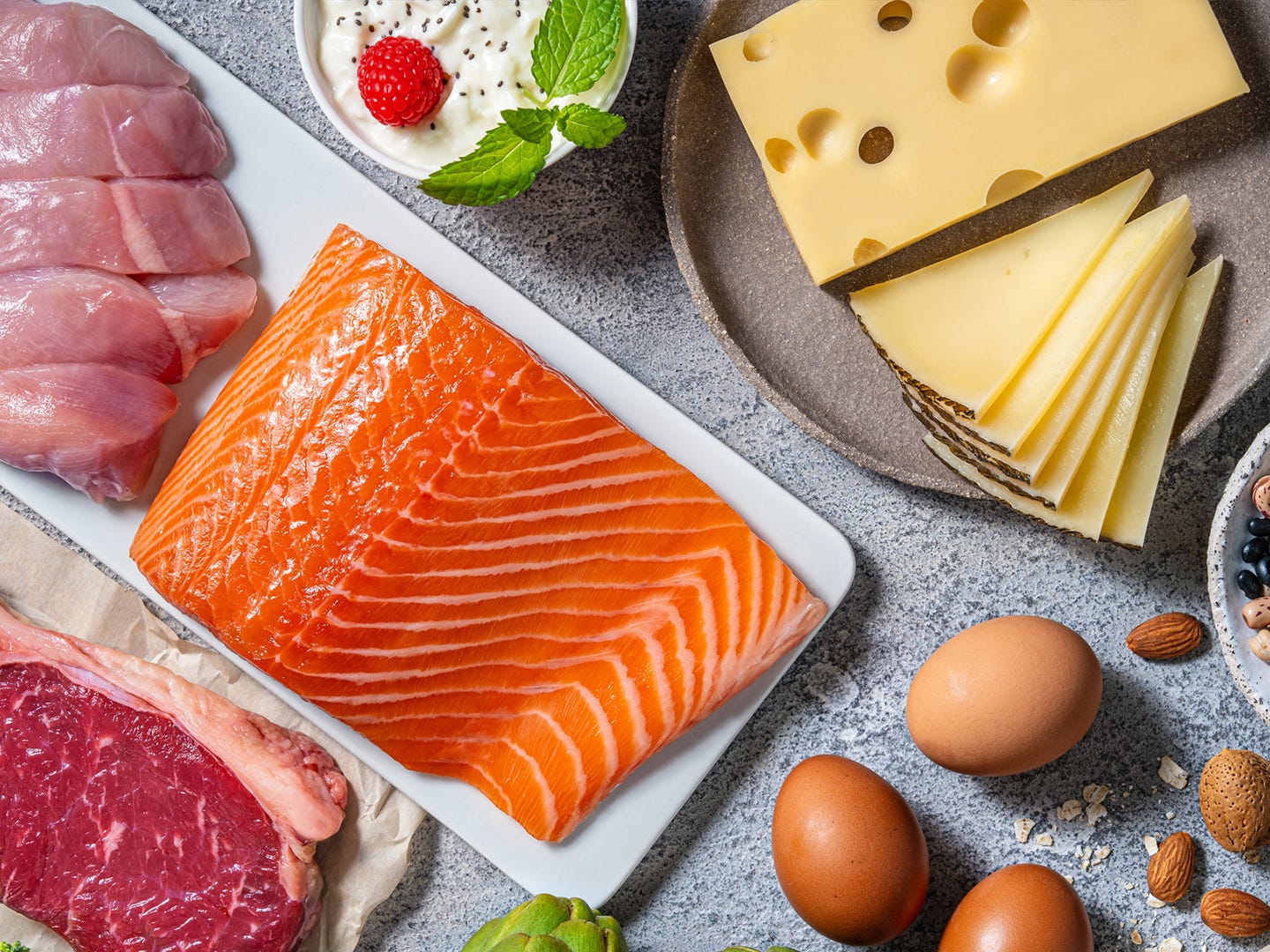
Single Foods:
8.5 oz (0.53 lbs) cooked chicken breast (~64g)
10 oz (0.62 lbs) grilled salmon (~64g)
9 whole eggs (~64g)
8 oz (0.5 lbs) lean ground beef (90% lean, cooked) (~64g)
3.5 cups (28 oz) Greek yogurt (plain, whole-fat) (~54g)
5 cups (40 oz) whole milk (~40g)
1.75 cups (14 oz) cottage cheese (whole-fat) (~40g)
Practical Combinations:
6 oz chicken breast (42g) + 2 eggs (12g) + 1 oz almonds (6g)
6 oz salmon (38g) + 1 cup cooked quinoa (8g) + 1 cup spinach (2g)
3 eggs (18g) + 1 cup Greek yogurt (16g) + 2 tbsp peanut butter (8g) + 1 oz cheese (8g)
Plant-Based Protein Sources
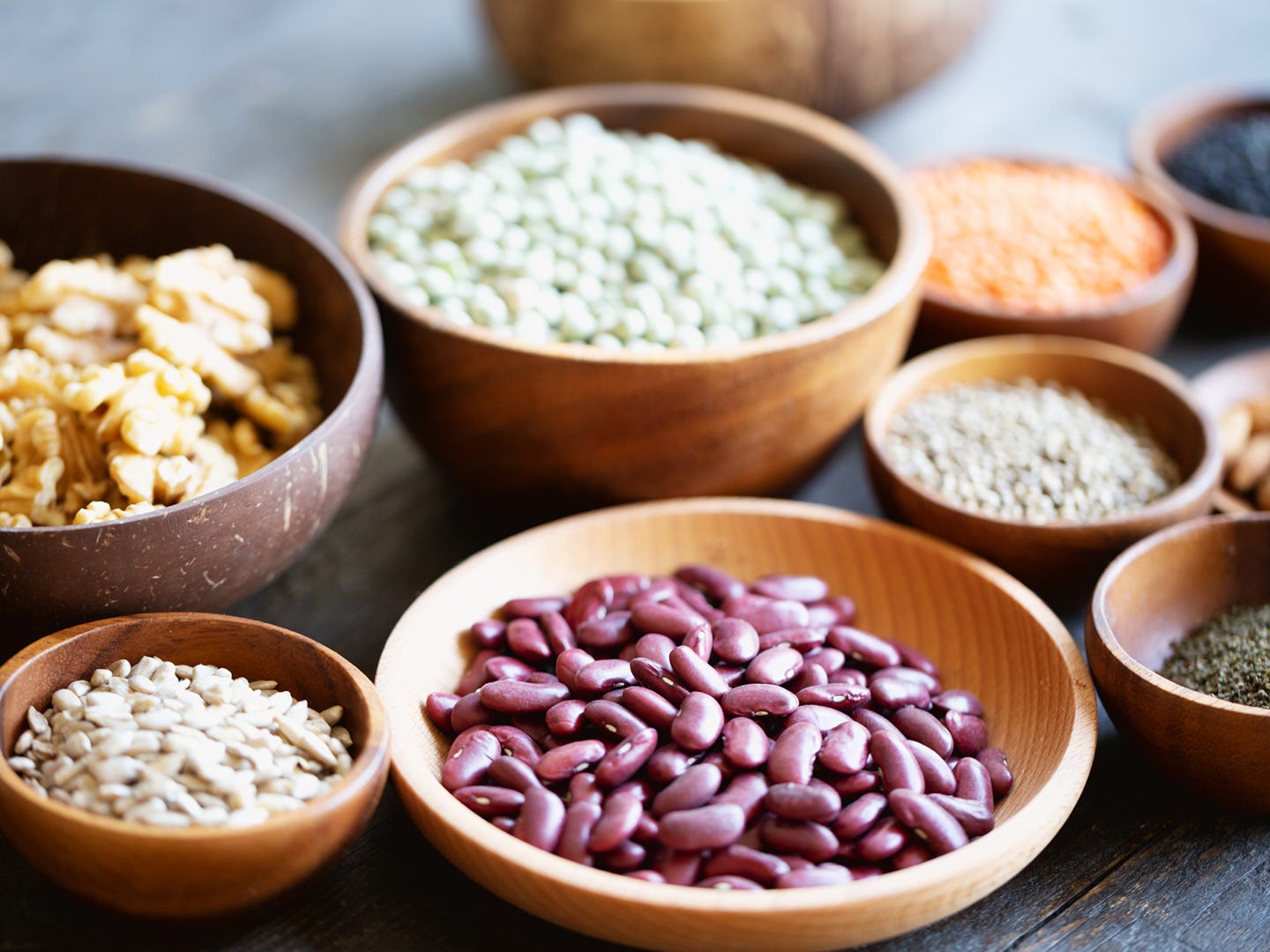
Single Foods:
2.5 cups cooked lentils (~64g)
2.75 cups cooked chickpeas (~64g)
2 blocks (14 oz) firm tofu (~64g)
2.5 cups cooked black beans (~64g)
8.5 tbsp peanut butter (~64g)
1.25 cups hemp seeds (~64g)
Practical Combinations:
1.5 cups cooked lentils (27g) + ½ block tofu (20g) + 2 tbsp peanut butter (8g)
1.5 cups black beans (30g) + 1 cup quinoa (8g) + 1 oz pumpkin seeds (8g)
1.5 cups chickpeas (32g) + 2 tbsp tahini (6g) + 1 slice whole wheat bread (5g) + 1 oz almonds (6g)
Since protein is so important, is more always better? Not necessarily. Even though protein has such a high status in our society, there’s likely no advantage to eating more of it than needed, with a particular risk from eating more than 2 grams/kg of body weight. If you eat more protein than your body needs to repair and maintain tissues, it will be “burned” as fuel. But that puts a higher workload on the body than the metabolism of carbohydrates and fats. In addition, protein is not as “clean burning” as carbohydrates and fats. It leaves residues of nitrogen-containing compounds that must be processed by the liver and removed by the kidneys. Over time, high-protein diets increase the risk of kidney damage. They can also lead to a variety of digestive issues, in part because high protein intake often goes along with low fiber consumption.
Dr. Weil’s Take:
I believe that many people in our society are obsessed with protein, fearful of not getting enough, and never thinking about getting too much. As little as two ounces of a protein-rich food a day may be enough to prevent protein deficiency in most adults; four ounces will certainly do it. My anti-inflammatory diet calls for two to six four-ounce servings of wild Alaskan salmon, herring, sardines, or Alaskan black cod a week, along with one to two servings per week of omega-3 enriched eggs, natural cheese (one ounce equals one serving), or whole soy foods.
We need only 10 to 20 percent of calories from protein daily – that’s not much. Rather than meat, you’re better off choosing less-concentrated plant protein sources, such as beans, nuts, seeds, and whole grains. These come packaged with fiber, slow-digesting carbohydrates, healthful fats, and phytocompounds that help protect against disease.
Diana’s Take:
Protein is one of three macronutrients (alongside carbohydrates and fat), and all three, in the right balance, are essential to both survive and thrive. There’s no question that protein is important—it plays a key role in growth, repair, satiety, and even blood sugar regulation. I’m certainly not saying we should ignore protein intake or that some people may benefit from paying closer attention to their protein needs, especially athletes, pregnant and nursing mothers, and aging women.
But I can’t help but feel like the obsession with protein has maybe gone a bit too far. It seems like most of my clients are stressing over how to get 30 grams of protein at breakfast or hitting 150–200 grams a day when, in reality, they likely don’t need that much. In the pursuit of that much protein, many people find they have to rely on ultra-processed protein bars, shakes, and snacks—foods that may be high in protein but are also loaded with artificial sweeteners, additives, and other questionable ingredients.
What concerns me the most is that in our hyper-focus on protein, we’ve lost sight of other equally important nutrients—fiber being my biggest concern. While true protein deficiency is virtually unheard of in the U.S., nearly 90% of women and 97% of men aren’t eating enough fiber. Fiber is critical for gut health, digestion, microbiome health, blood sugar balance, and even longevity.
Beyond nutrient balance, I’ve seen how this fixation on protein has added unnecessary stress to people’s lives. Eating should be nourishing and enjoyable, but it’s become a numbers game for many—obsessing over protein grams, chugging shakes, and forcing down meals just to hit some arbitrary target.
At the end of the day, health isn’t about a single macronutrient. Instead of fixating on protein goals, I think we’d be better off asking: Are we eating real, whole foods? Are we getting enough fiber, healthy fats, vitamins, and minerals? A well-rounded, nutrient-dense diet truly supports long-term health, and I think it’s important that we remember that.

Six Mushrooms With Health Benefits

Mushrooms are a staple in our kitchens. Not only are they pleasant to the palate and versatile, but they also make a convenient meat substitute, thanks to their hearty texture and rich umami taste. Beyond being flavorful, mushrooms have been widely studied for their potential health benefits. Many edible species contain polysaccharides, powerful compounds that may enhance the body’s natural killer cells - white blood cells that target abnormal cells - helping to defend against cancer and infections. Additionally, mushrooms have potent anti-inflammatory properties and may even support healthy cognitive function.
The fungi listed below are readily available in grocery or Asian specialty stores and are all good sources of polysaccharides. These species all have enjoyable tastes and are a good place to start if you want to add more mushrooms to your diet, whether in your favorite recipe or as a side dish on its own.
Additionally, supplementing with mushrooms may enhance health and well-being, especially if you have been diagnosed with cancer (or are at high risk for it), want to strengthen your immune system, or are looking for cognitive support. When choosing a supplement, we recommend looking for products that contain both fruiting bodies and mycelium for maximum effectiveness. However, please speak with your doctor before adding any mushroom supplements (or any supplements in general) to your routine, as they may not be right for everyone.
We often like to combine multiple mushroom species for a broader range of benefits, and the below are six of our favorites.
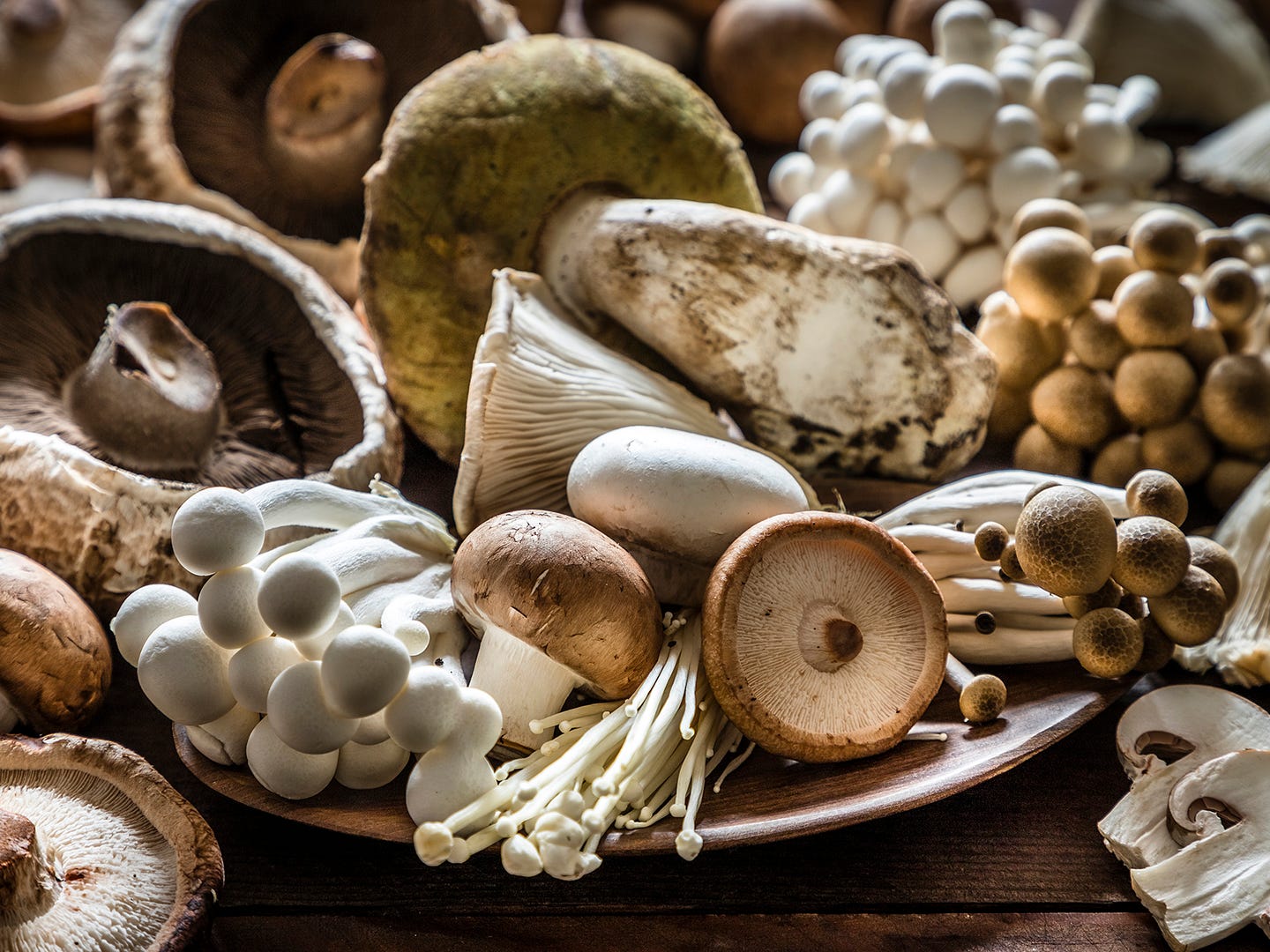
Enoki (Flammulina veluptipes). Japanese farmers who grow (and regularly eat) this mushroom have unusually low rates of cancer, perhaps because enoki contains a compound called flammulin that has significant anti-tumor properties.
Maitake (Grifola frondosa). According to research, this mushroom shows significant anti-cancer activity; it may also help fight viruses, boost immunity, and lower blood pressure and blood sugar. I love making and eating grilled maitake brushed with teriyaki sauce - Dr. Weil
Reishi (Ganoderma lucidum). This mushroom appears to inhibit the growth of cancerous tumors and boost immune function. Perhaps that's why the Chinese and Japanese consider it a longevity food.
Royal sun agaricus (Agaricus blazei). Oncologists in both Japan and Brazil use this mushroom in their treatment protocols. It may have significant anti-tumor action.
Shiitake (Lentinula edodes). This mushroom is growing in popularity and can now be found in many supermarkets. That's good news since it appears to fight cancerous tumors, among other benefits. Shiitake mushrooms are my favorite to use when cooking. I add them to tacos, breakfast burritos, and even on top of veggie burgers - Diana.
Zhu ling (Polyporus umbellatus). This mushroom may be particularly useful in the fight against lung cancer: There's evidence that it helps stimulate the body's immune response against lung tumors. It may also help counteract the side effects of chemotherapy and radiation.
Just remember to thoroughly cook your mushrooms before eating!

A new Friday recipe
Our must-have kitchen tools
A brunch primer
Diana’s road to becoming a vegetarian
An easy, healthy snack for kids
And more…