


How I’m approaching weight loss postpartum - without counting calories.
With both Elio and Owen, I gained around 40 pounds during pregnancy. Which is interesting to me because the weight came on differently each time. With Elio, I gained most of it in my third trimester, and with Owen, I gained much more in my first trimester. The recommended weight gain in pregnancy is 25–35 pounds, but after two pregnancies, I know that 40 pounds is what makes my body happy. So if you are someone who gains more than the recommended amount, I’m there with you!
I wrote about this in an earlier post, but after having Elio, I assumed the weight would simply “fall off” because I was breastfeeding. That just isn’t my experience, and it doesn’t seem to be the experience of many women I know. Breastfeeding requires extra energy (i.e., calories), but the hormones that accompany it tend to make you hungry. Add in sleep deprivation and stress, and it’s easy to understand why eating habits might look different than they did before pregnancy.
Before getting into the practical side of how I’m thinking about weight loss this time around, I want to acknowledge something important. I’ve spent much of my career coaching women on the idea that body weight does not dictate their worth. I wholeheartedly believe that. At the same time, I think it’s okay to want to change your body or have goals around how you look and feel. This is why I like the idea of body neutrality more than body positivity. We don’t have to love every aspect of our bodies every day, and we don’t have to pretend we don’t care about how we look. We can appreciate what our bodies do for us while still wanting to feel more comfortable in them.
I’ve worked hard to separate my self-worth from my weight, and I feel good about that relationship. But I’m also looking forward to fitting back into my clothes and returning to a weight where I feel comfortable.
After having Elio, it took about nine months to feel comfortable in my clothes again, and closer to a full year to feel like myself. I’m expecting a similar time frame this time around too. This isn’t to say it’s easy to be patient, and gradual weight loss can be frustrating, but I want to protect my milk supply, so aggressive restriction isn’t the answer.
I also don’t count calories or macros. Tracking can be a useful tool for some people, but it’s not for me. I find that it turns eating into a math problem and makes it harder for me to tune into my hunger and fullness cues.
I’m also petite, which means my overall energy needs are relatively modest. When your calorie needs are lower to begin with, creating a calorie deficit can feel pretty hard. This is why men often have an easier time losing weight than women! There isn’t much room to cut back before you start feeling hungry. Instead of counting calories, I’m prioritizing healthy meals, staying active, and being mindful of portions.
Here’s exactly what I’m doing to lose 20 pounds without counting calories:
1. Building meals around protein and fiber.
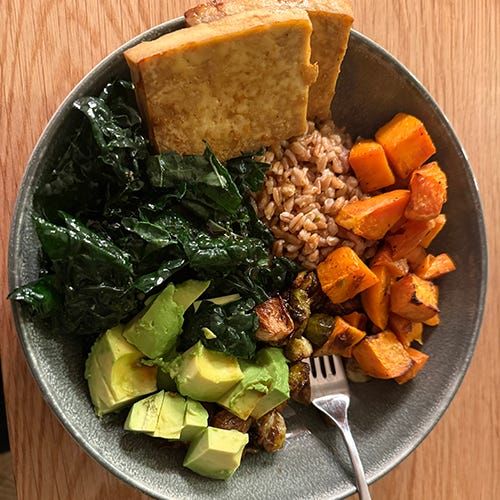
I’m not starving myself, and I never will. While it’s normal to feel a little hungry when losing weight, hunger isn’t the goal. Eating meals rich in fiber and protein helps me stay full for longer, so that’s what I’m prioritizing right now. Since I’m a vegetarian, that looks like lots of tofu, beans, lentils, whole grains, vegetables, and fruit. I like to focus on what I can add to a meal to make it more nutritious and filling, rather than what I need to cut out.
2. Paying attention to hunger and fullness cues
I’m being much more mindful of my portions. I like to add a little less food to my plate than I normally would, while always giving myself permission to go back for more. This helps with feeling like I need to “clean my plate,” and more often than not I’m satisfied with that smaller portion size! During meals, I check in with myself to notice when I feel satisfied. I’m not trying to leave the table hungry or eat as little as possible, especially while breastfeeding, but I am trying to stop when I’m satisfied rather than stuffed.
3. Making room for the foods I love.
This is important and what makes the weight-loss journey sustainable for me! And keeping it sustainable is what leads to true progress. I love sweets, and I know that cutting out dessert entirely leaves me feeling really restricted. So instead, I’m intentional about desserts and make room for eating something sweet every day, like a piece of chocolate after lunch or a mini ice cream cone after dinner. Having something sweet I can grab that’s already portioned out is really helpful.
4. Moving my body.
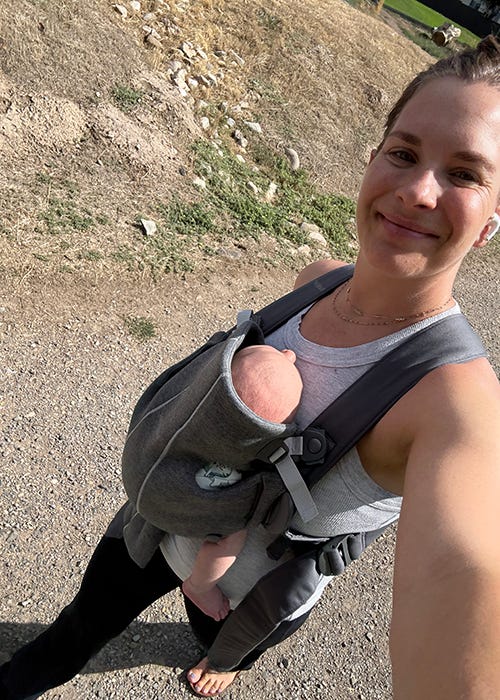
I genuinely love exercising, and it’s one of the most important things I do for my mental health. Exercise isn’t a punishment for eating. My biggest piece of advice for being active is to find something you love doing. Right now, I lift weights about three times a week at a gym I love and then do something that gets my heart rate up two to three times a week. That might be a Peloton ride, a harder hike, or a cardio class at my gym. I’ve had to stay flexible with this, though, as sleep is currently more important to me than getting a workout in.
5. Being patient.
This is by far the hardest one for me. Protecting my milk supply is a top priority, so I’m aiming for no more than 1 pound a week, which is a lot honestly. I also know from experience and being in this field that weight loss isn’t linear. Some weeks I’ll lose, and some weeks I’ll maintain (or even gain). Weight loss is mostly a mind game, and it’s important to stay consistent even when you aren’t seeing progress or progress isn’t coming as quickly as you want.
Are you trying to lose weight after having a baby? Share your journey in the comments!
I share Nourished Mama Collective every Tuesday. If you’d like these reflections and nutrition insights delivered to your inbox, you can subscribe below.
WEIL Nutrition Corner® is the registered trademark of Healthy Lifestyle Brands, LLC