



Today, Dr. Weil reflects on being a father and grandfatherhood and shares what these roles mean to him in honor of Father’s Day and his upcoming birthday.
We’re also taking a deep dive into olive oil: how to choose a high-quality product, spot fakes, store it properly, and more.
Plus, don’t miss a fan-favorite dessert from True Food Kitchen - Lemon Olive Oil Cake!
And finally, our seasonal food roundup is here. Discover what to eat this month and get inspired to add these fresh picks to your menu.
We’d love to hear from you!
What is your take on olive oil - is it your go-to oil? What type do you prefer? Share in the comments!
(P.S. Become a paid subscriber to join the full conversation.)


Dr. Weil on His Birthday and Being a Father
Birthdays have become less important to me as I’ve aged. When I was younger, they felt more like milestones - markers of progress and celebration. These days, birthdays are more like gentle reminders of the passage of time. I still note them, but I don’t feel the need to mark them with much fanfare. I have no plans for my upcoming 83rd, and that feels perfectly fine. I’m immensely thankful for the life I’ve lived, the experiences I’ve had, and the people I get to share it with. It’s just that the older I get, the more I value the quiet, everyday joys over the calendar-driven ones.
This year, my birthday and Father’s Day are a week apart. I didn’t become a father until I was 49 - later than most - but it’s been one of the greatest joys of my life. My daughter Diana brings so much light and curiosity into my world. I’m thrilled that she shares so many of my passions: healthy living, traveling, cooking, exploring, and experimenting. I especially love that we get to collaborate creatively, which has become a rewarding way to keep learning and connecting. Inventing recipes together is always a highlight, and I’m counting on her to come up with something special for Father’s Day. (What’s it going to be, Diana? Or will it be a surprise?)

As for being a grandfather, I never quite imagined myself in that role, but now that I am, I feel a deep sense of purpose. I want to offer my grandson the best of what I’ve learned - so he can grow up with a strong foundation, nourished by love, experience, and maybe a few good recipes.

Olive Oil 101
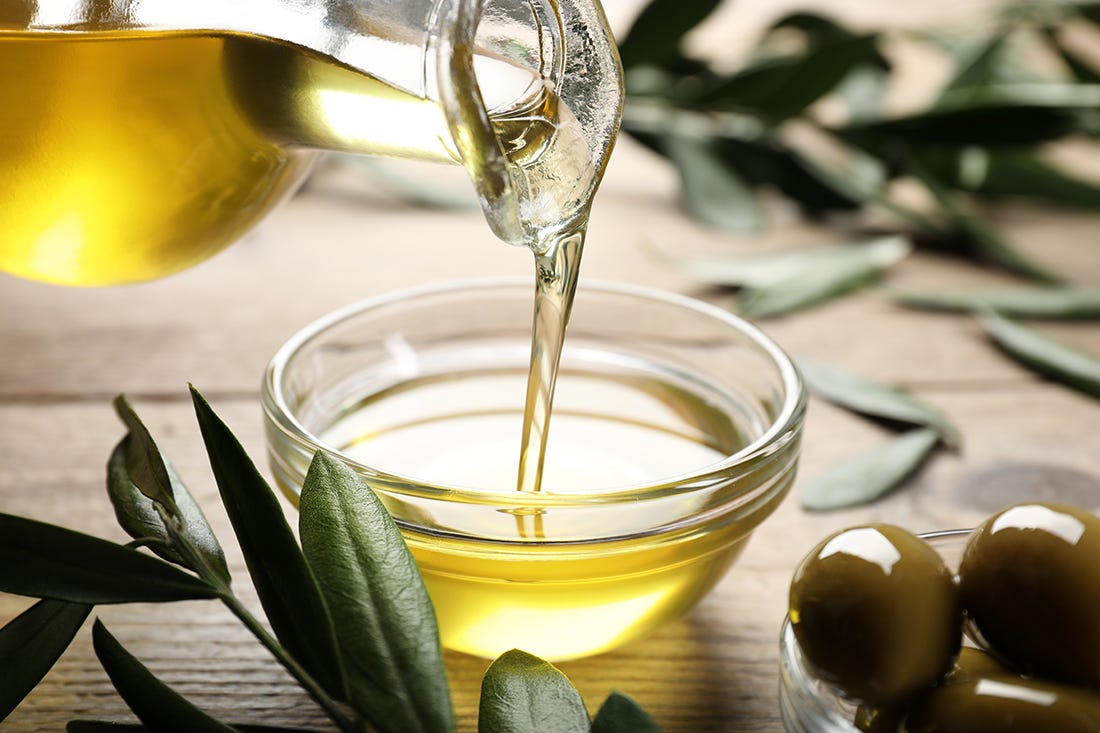
National Olive Day is celebrated annually on June 1st. It's a day to celebrate olives, a fruit that has been a part of culinary traditions and a symbol of peace for centuries. So what better time than now to take a look at olive oil - our go-to oil and part of the Anti-Inflammatory Food Pyramid! Below learn more about olive oil, including what we suggest you look for when purchasing olive oil - plus a Lemon Olive Oil Cake recipe!
What Is Olive Oil?
Olive oil is more than just a cooking fat - it is part of our healthy, Anti-Inflammatory Diet. All kitchens should include olive oil, for it is widely known for its heart-healthy benefits, as it lowers LDL (bad) cholesterol. It is also rich in monounsaturated fats and polyphenols, which help reduce oxidative stress and inflammation, helping to support brain and joint health and reducing the risk of stroke and type 2 diabetes.
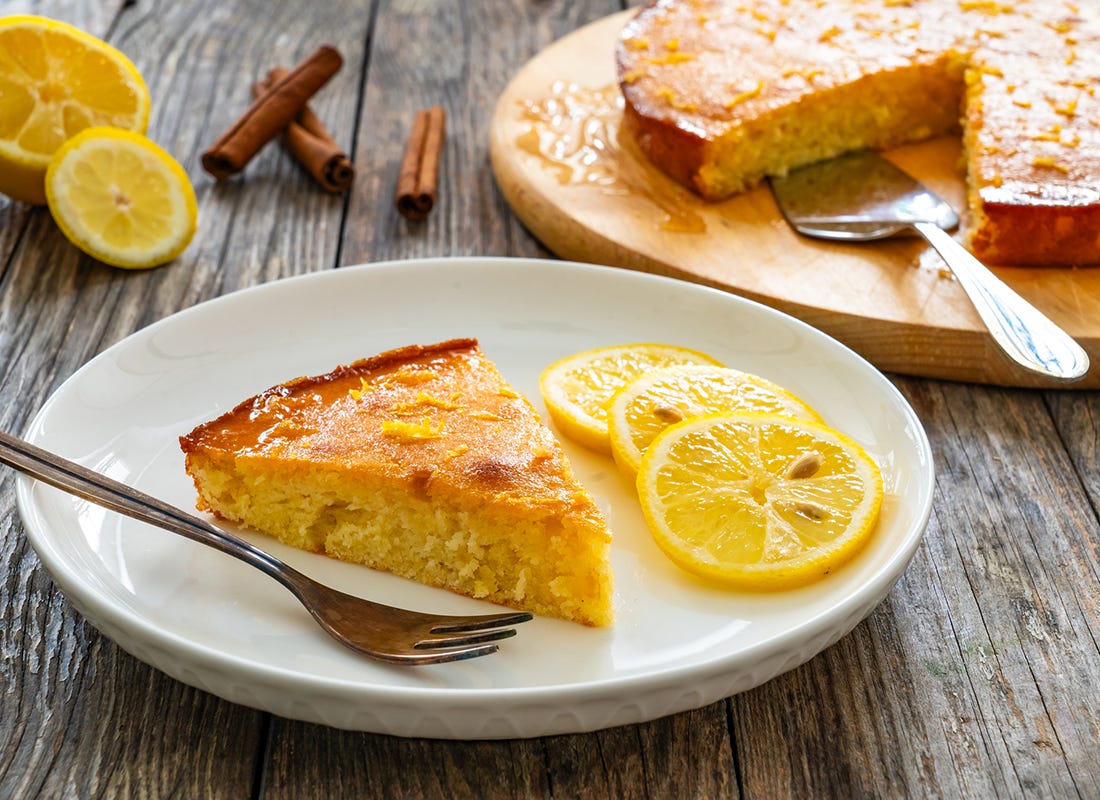
While olive oil is usually considered to be used for savory cooking and dressings, it can also be used in baked goods - try the Lemon Olive Oil Cake recipe, a True Food Kitchen favorite!
Types of Olive Oil
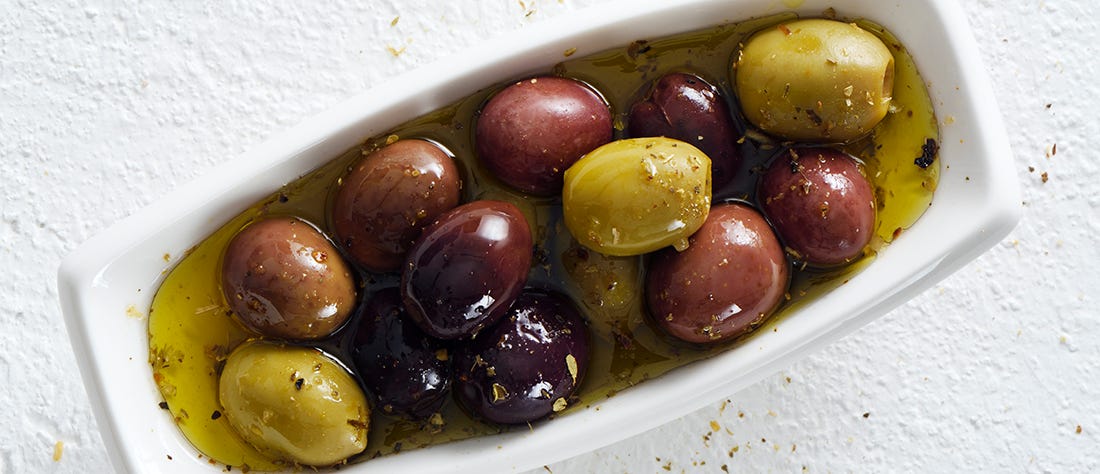
Made by pressing whole olives, olive oil comes in a variety of options, including:
Extra Virgin Olive Oil. Cold-pressed, no chemicals, extra virgin olive oil (EVOO) is the highest in antioxidants, has the richest flavor, and offers the most health benefits. This is the main type of olive oil we use. It's great in dressings, dips, and drizzled on fish or veggies. Using it raw helps preserve flavor and nutrients. You can also use EVOO for medium-heat cooking (sautéing, roasting), as it remains stable up to ~375°F.
Virgin Olive Oil. Cold-pressed, but lower quality than EVOO. It is slightly lower in antioxidants and has a milder flavor than EVOO. You can use virgin oil for low to medium-heat cooking.
Pure Olive Oil / Olive Oil. This blend of refined oils is typically less nutritious as it usually undergoes heating, filtering, and/or chemical processes to improve stability. It has a neutral flavor and is often used for high-heat cooking (frying stir-frying) as it has a higher smoke point.
Light or Extra Light Olive Oil: Heavily refined and despite its name, not lower in calories. This variety offers very little olive flavor and the lowest nutrient content of the olive oils.
What To Look For When Buying Olive Oil
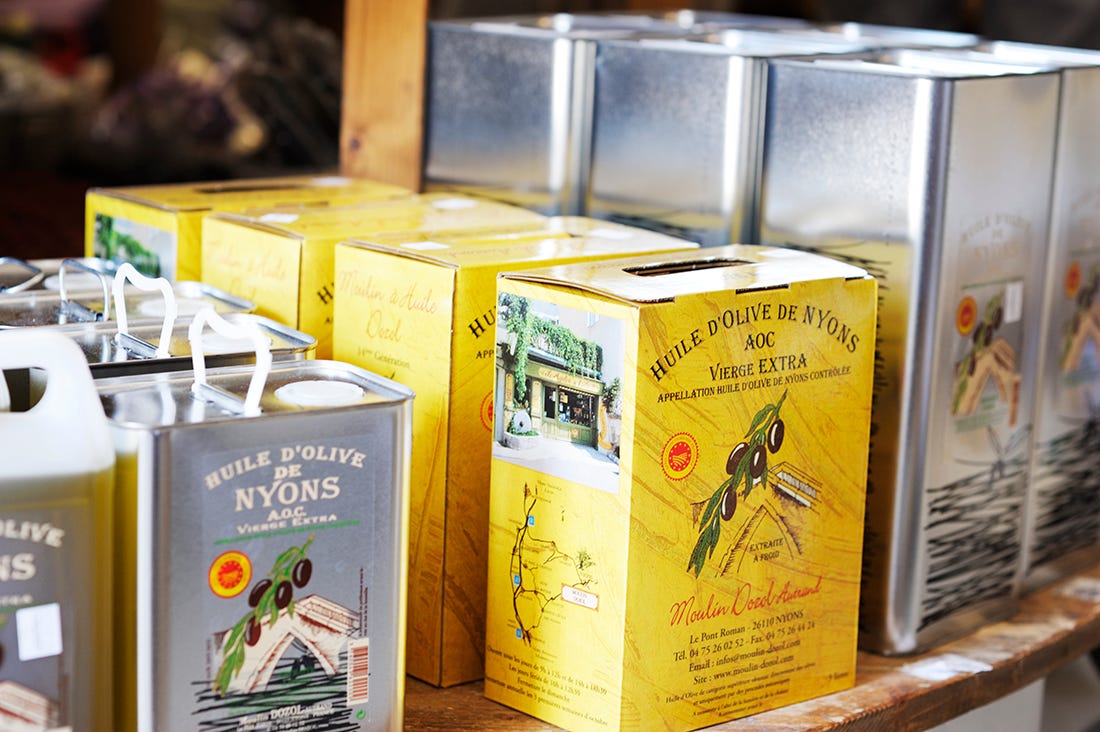
Read the labels. Look for “Extra Virgin” - not “light” or “pure.” Choose oils that specify a harvest date; fresher oils generally have a better taste.
Dark glass bottles or aluminum tins. Light can degrade the nutrients of olive oil, so darker containers are best.
Single-origin or estate offerings. This indicates a higher-quality oil and allows you to trace the origin of the oil. See below for more information on “fake” olive oil.
Country of origin. Spain, Italy, Greece, California, and Portugal produce high-quality EVOO, so stick to brands that grow olives there.
How to Store Olive Oil
The best way to store olive oil is to keep it in a cool, dark place, away from heat. Try to use within 3-6 months of opening. You can also purchase olive oil sprayers that are made out of metal or glass; just be sure to store them away from your oven or stove to prevent oxidation.
Olive Oil: Real or Fake?
Olive oil fraud is a real thing. Some sellers will intentionally mislabel or adulterate olive oil to increase profits. This can involve diluting high-quality EVOO with cheaper oils, or misrepresenting the origin or quality of the oil.
Since EVOO is highly regarded for its taste and health benefits, it often costs more than other versions. As the supply chain for olive oil can be long and go through many hands, there is an opportunity along the way for people to mislabel products. Unfortunately, adulterated olive oil can often be difficult to detect.
Adulteration is done typically through dilution with cheaper oils (cheaper olive oils or soybean, sunflower, or canola oils), mislabeling of lower-grade oils as EVOO, and false labeling to suggest that the oil came from a region known for its EVOO production.
In addition to the tips we gave above on what to look for when buying olive oil, be wary of very low pricing, as this can be an indicator that the product is not genuine EVOO. Always buy from trusted stores and look for quality brands.
Sources:
https://www.fda.gov/food/compliance-enforcement-food/economically-motivated-adulteration-food-fraud

Carrots

An excellent source of antioxidant compounds, carrots (Daucus carota) are among the richest vegetable sources of beta-carotene, a vital nutrient for maintaining healthy vision. Beta-carotene helps slow the progression of macular degeneration, prevents cataracts, and promotes healthy night vision. These familiar orange root vegetables are powerhouses of nutrition: there are more vitamin A precursors in carrots than almost any other vegetable, and they have high levels of biotin, vitamin K, vitamin B6, vitamin C, thiamine and potassium. Carrots also provide a significant amount of dietary fiber.
A member of the same family as parsnips, fennel, and dill, carrots come in more than just the common orange variety seen in most groceries. Carrots were originally white or purple - selection and hybridization in the early to mid-1900s created the orange carrot popular today. But the older varieties, including red and yellow types, are still available at farmer’s markets and specialty shops, and the seeds can be purchased for your own garden - Dr. Weil grows and enjoys the Kyoto red variety. So, look around and mix up your carrot colors for a healthful and visually interesting assortment.
Tip: When buying carrots that have green, leafy tops still attached, cut off the tops before storing – the leaves will leach moisture from the root and cause premature wilting.
Cantaloupe

Cantaloupe (known to Australians as rockmelon) is a thick-skinned fruit with a netted skin. During the peak season of June, July, and August, cantaloupe offers a refreshing, sweet, and hearty treat, perfect for fruit salads and smoothies. Belonging to the same family as pumpkin, squash, and cucumber, cantaloupe is an excellent source of beta-carotene (see carrots above for more information), as well as vitamin C. With a relatively low calorie count per serving, cantaloupe is a sweet and satisfying way to get your vitamins during the summer months. Note: Diabetics should eat cantaloupe in moderation, as it falls in the medium range of the glycemic index.
Tip: Two ways to tell if a cantaloupe is ripe: One, press your finger into the stem end - a gentle yielding is one indication of ripeness (avoid cantaloupes with too much “give,” as they are overripe; alternately, ones with no “give” are not yet ripe.) Two, smell the stem end – a ripe cantaloupe will have the distinctive aroma of cantaloupe flesh.
Raspberries

Known as an aggregate fruit – meaning that smaller sections with seeds and fruit create a larger whole – raspberries are among Dr. Weil’s favorites due in part to their significant nutritional value. Raspberries are a good source of vitamin C and fiber and provide folate, vitamins B2 and B3, magnesium, and other essential nutrients. Raspberries have considerable antioxidant potential (50% more than strawberries), and they place in the top 15 of the American Journal of Clinical Nutrition’s top antioxidant sources. In addition, ellagitannins, natural protective compounds found in the raspberry, appear to have potent anti-cancer activity.
For an added dose of fiber and antioxidants, top your cereal with raspberries, add some to a salad, use them in sauces and baked goods, or enjoy them on their own. Because commercial strains may be heavily sprayed with pesticides, Dr. Weil recommends buying organic varieties.
Tip: Since raspberries are highly perishable, handle them carefully and buy only what you intend to use within a day or two.
Watermelon

Providing healthy doses of vitamins C, A, B6, and B1, watermelon is a low-calorie, antioxidant-rich treat. A member of the Cucurbitaceae family, watermelon is particularly healthy for men: it is a good source of the carotenoid lycopene, which has been shown to help reduce the risk of prostate and other cancers. Add this healthy fruit to your summer menu for a refreshing treat, perfect for any hot day. Note: Diabetics should eat watermelon in moderation, as it falls in the high range of the glycemic index.
Tip: To spice it up, add some black or crushed red pepper to sliced watermelon.

Should you stop buying shredded cheese?
The benefits of tinned fish
A new look at MSG
Fueling breakfasts