The second Monday of each month focuses on ways to incorporate eating less meat into your diet - good for the planet, good for your health, and something everyone can dabble in or take on full force! Delicious options to enjoy meals without meat. No judgement, just suggestions!
If you are a paid member, we appreciate your interest, and encourage you to ask questions in the comments and reply to the discussion prompts! To be part of the discussion and access all content, upgrade to paid.

When it comes to my most-used kitchen item, it's hard to pick just one. I love my knives (a gift from my dad when I turned 23), and I believe every home cook deserves a good set. I love my wooden cutting boards, which I swapped in for the plastic ones I had used for years. I love my air fryer, Instant Pot, and electric tea kettle. But lately, my cast iron pans have taken the top spot - especially the one my husband and I found at an antique shop when we first started dating.
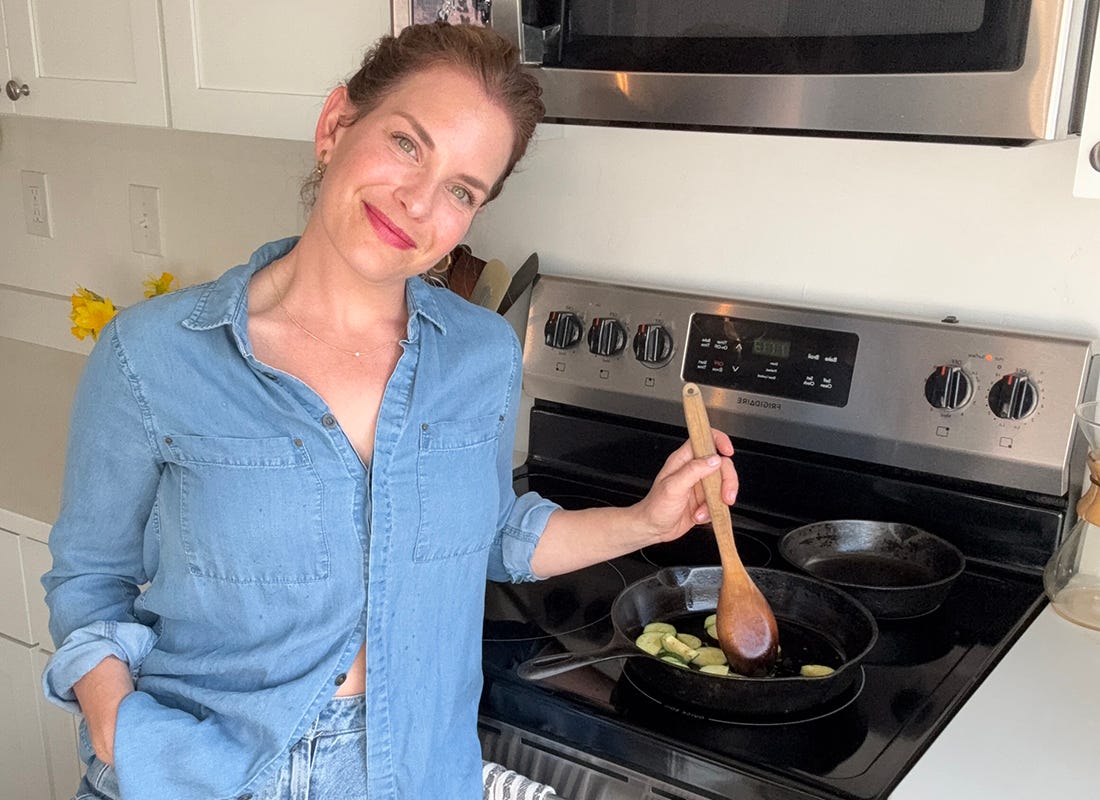
When my husband, Harley, and I first moved in together, I brought along several expensive pans - some stainless steel, others nonstick. My husband, on the other hand, came with just a few cast iron pans, which I avoided like the plague. I was scared of ruining them, didn't know how to wash them, and when it came to seasoning them, forget about it - I had no clue where to start.
But nine years later, I'm a total convert.
A well-cared-for cast iron pan is naturally nonstick and can provide extra dietary iron. Unlike most nonstick cookware, where you have to worry about potentially toxic coatings and chemicals leaching into your food (especially at high temps), cast iron only gets more nonstick with use. Iron deficiency can be common for vegans and vegetarians, and it's especially important for infants transitioning to solids as breast milk is naturally very low in iron. I cook everything I feed my son, Elio, in a cast iron pan; it's an easy way to boost his iron.
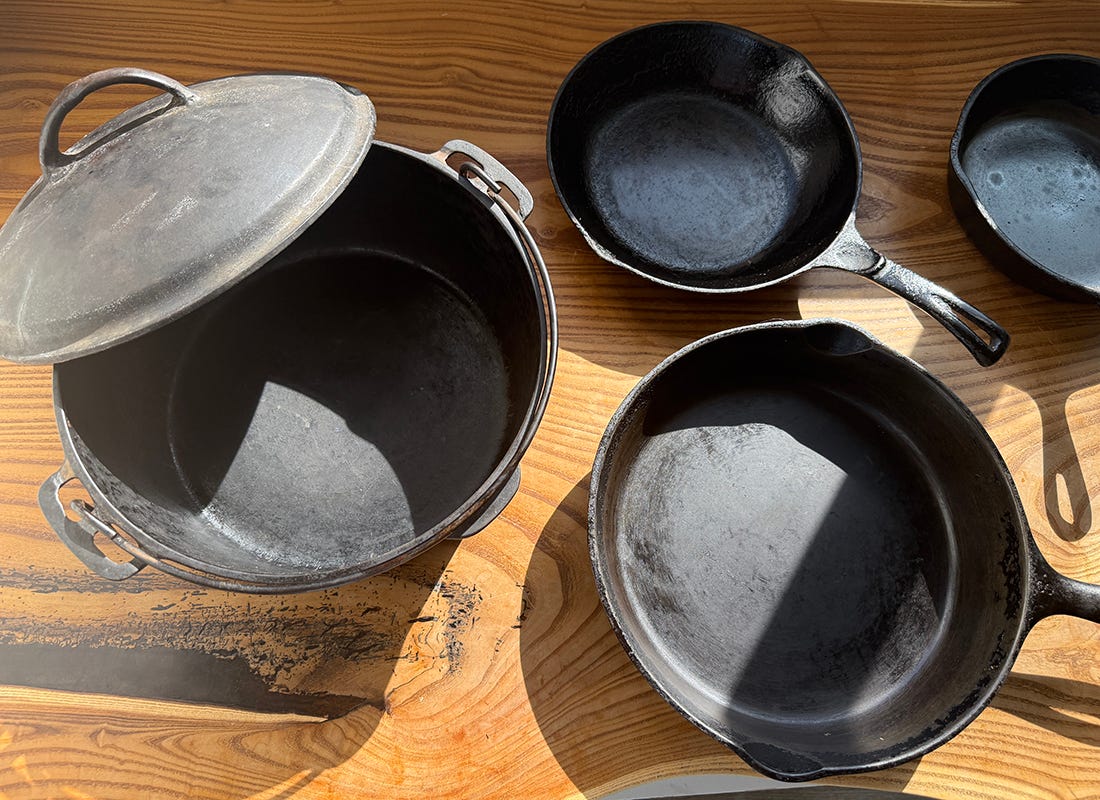
I've loved making sourdough bread lately, and a cast-iron Dutch oven is a must. It traps steam while the bread is baking, helping to create the perfect crust. And when it comes to tofu? Cast iron is a game-changer. It provides the perfect balance of nonstick cooking while still allowing you to use a metal spatula - ideal for scraping up crispy, golden tofu bits. Cast iron is the only pan I'll use for tofu now! Cast iron also has excellent heat retention and even heat distribution, ensuring food cooks evenly. Cast iron is versatile and forgiving, unlike nonstick pans, which can't handle high heat, or stainless steel, which has to be properly preheated. They are durable and can be passed on from generation to generation, making it an eco-friendly option. And unlike a lot of cookwear, cast iron is pretty affordable - you can find a 10" cast iron for under $30.
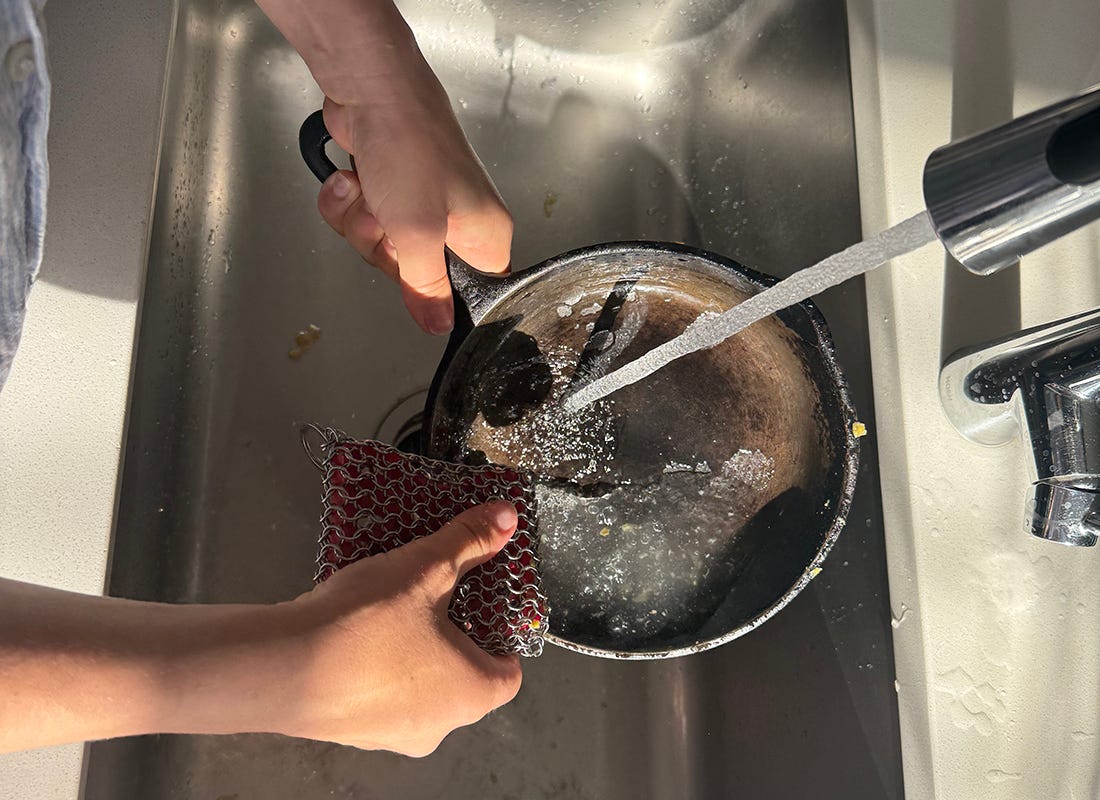
Despite what I once believed, caring for cast iron is actually incredibly easy. To clean, I rinse it under hot water and use a chainmail scrubber to remove any food residue (you can find one at most cooking stores or online). Then, I wipe it dry with a paper towel or let it dry over low heat on the stove for about a minute. If the pan looks a little dry, I apply a thin layer of oil and wipe it clean. The key is to avoid leaving excess oil, which can create a sticky surface.
The biggest myth about cast irons is that they're delicate - it's actually the opposite. Even if you make a mistake, cast iron is virtually indestructible. If you "ruin" the seasoning, you can simply re-season it. If you wind up with a sticky pan from too much oil, scrub it clean with soap and water. Even if they rust, they aren't ruined, just scrub off the rust and re-season. And yes, you can use soap to wash it if needed!
The more you use a cast iron pan, the better it gets. I honestly can't remember the last time we intentionally seasoned ours - we just cook with it daily, and a drizzle of avocado or olive oil naturally maintains the seasoning.
If you've been hesitant about cast iron like I once was, take this as your sign to give it a try. Whether you find one at an antique shop, inherit one from a family member, or buy a new one, I don't think you'll regret it.

Swapping In Plant Protein + Recipe
Throughout our lives, we have both followed - at some point - a vegetarian diet. I (Dr. Weil) was a lacto-vegetarian (allowing for some dairy products) from 1970 to about 1987; after that I began to include eating fish. I (Diana) have been a strict vegetarian since I was just three years old. So we are both familiar with the health benefits and satisfying food choices that a vegetarian diet can provide. A vegetarian diet can provide adequate protein while also offering health benefits including lower-than-normal incidence of heart disease and cancer, and lower risks of obesity and diabetes.
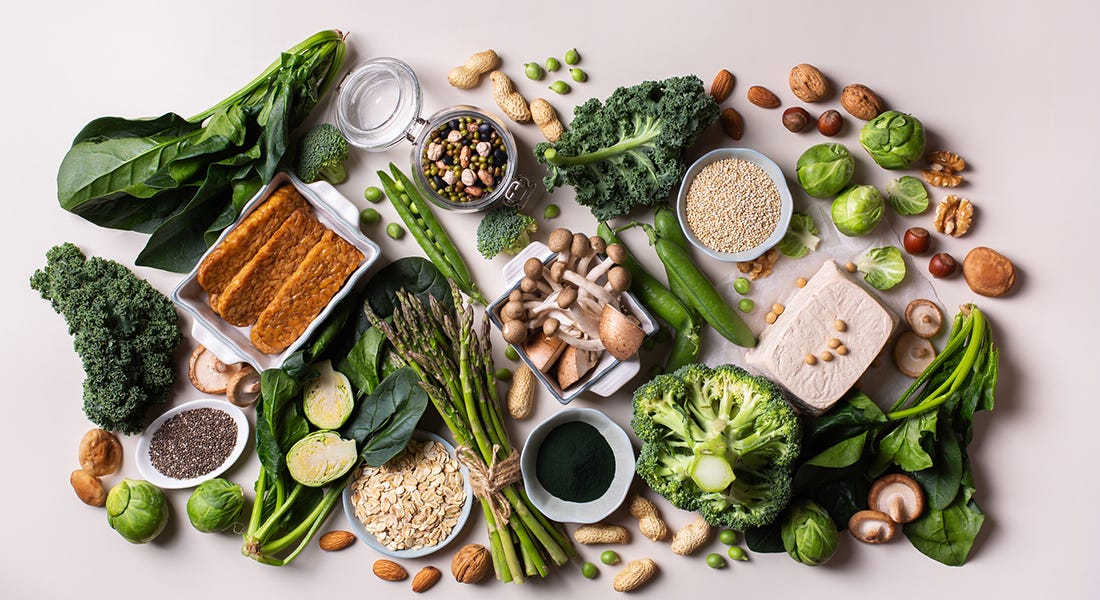
If you are interested in a vegetarian diet or simply want to try and eat more plant-based sources of protein, this list is a great place to begin!
5 Plant-Based Foods High In Protein (Plus A Recipe!)